

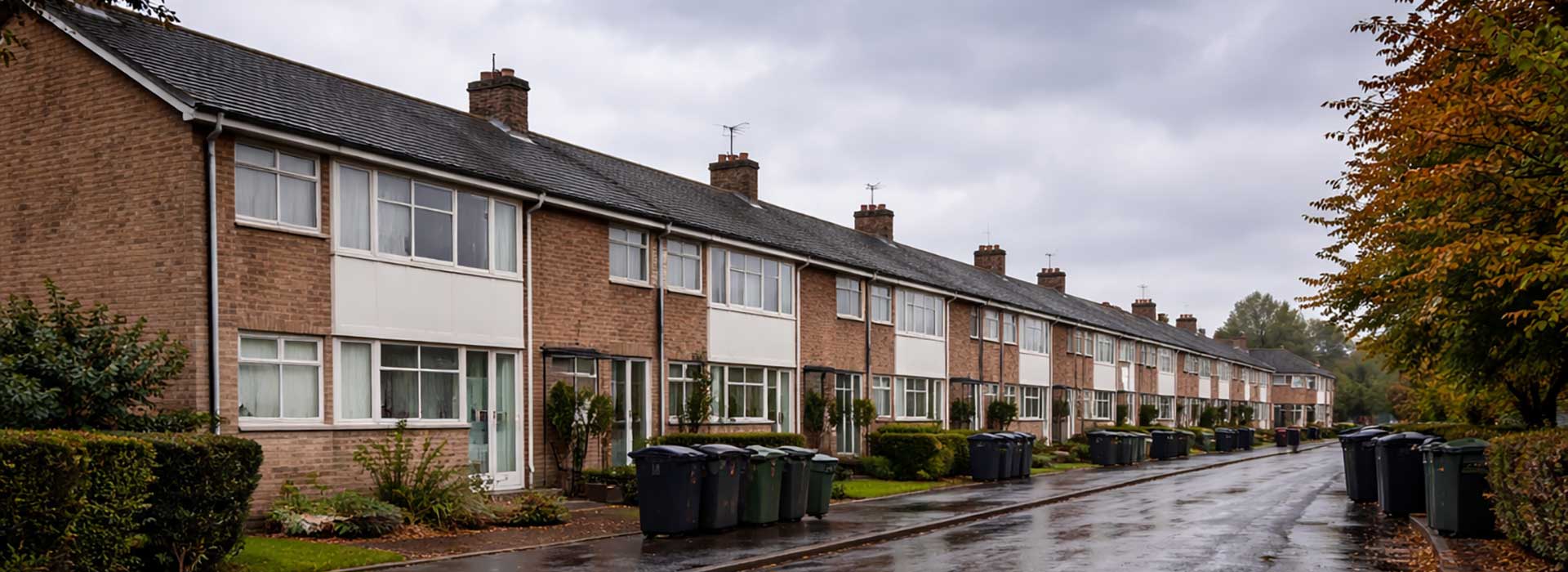


Why coastal homes are viewed differently
Living by the sea has its perks. Sea air, views, fewer neighbours. It also brings a few insurance eyebrows lifting.
Insurers treat coastal properties differently because the risks stack up in specific ways. Wind, salt, water and ground movement behave differently near the coast than they do inland.

Storm exposure and wind damage
Coastal homes are more exposed to high winds and driving rain. Roof coverings, chimneys, pointing and fixings take more punishment over time.
Insurers look closely at roof condition, age and materials. Older roofs, flat roofs and lightweight constructions tend to attract more scrutiny.
Salt air and accelerated wear
Salt in the air speeds up corrosion. Metal fixings, railings, window frames and external fixtures deteriorate faster near the sea.
Insurance usually responds to sudden damage, not gradual wear. This distinction matters more for coastal homes because normal ageing happens quicker.
Flooding and tidal surge
Flood risk for coastal properties is not just about rivers. Tidal surge, overtopping and surface water can all be factors.
Most standard home insurance policies include flood damage, but coastal flood risk may affect excesses, pricing or eligibility depending on location and elevation.
Cliff erosion and ground movement
Erosion is one of the trickier issues. Insurers distinguish between sudden collapse and long-term land loss.
Damage caused by gradual erosion is often excluded. If a property is close to a retreating coastline, insurers usually want distance measurements and local authority information.
Subsidence linked to coastal conditions
Sandy soils, clay layers and fluctuating water tables can contribute to ground movement near the coast.
Previous subsidence claims or underpinning work will normally be assessed separately from flood or storm risk.
Outbuildings, decks and sea-facing structures
Coastal homes often include decks, balconies, sea walls or external staircases.
- Some structures may be covered under buildings insurance
- Others may have specific limits or exclusions
- Maintenance-related damage is commonly excluded
It is worth checking how the policy defines permanent structures.
Holiday use and short-term letting
Many coastal properties are used as holiday homes or short-term lets.
Standard home insurance may restrict cover if the property is unoccupied for long periods or let to paying guests. Usage matters as much as location.

Repair methods and materials
Insurers often consider how repairs would be carried out after damage. Coastal planning rules and conservation requirements can influence costs.
Traditional materials, specialist trades and access difficulties are part of the assessment.
Contents insurance near the coast
Contents cover usually works in the same way as inland, but insurers may apply different flood excesses.
Items stored at low level, garages and basements are typically more exposed in coastal areas.
What insurers usually want to know
- Distance from the shoreline or cliffs
- Previous flood or storm damage
- Construction type and roof materials
- Occupancy patterns throughout the year
Accurate disclosure helps avoid cover being restricted later.