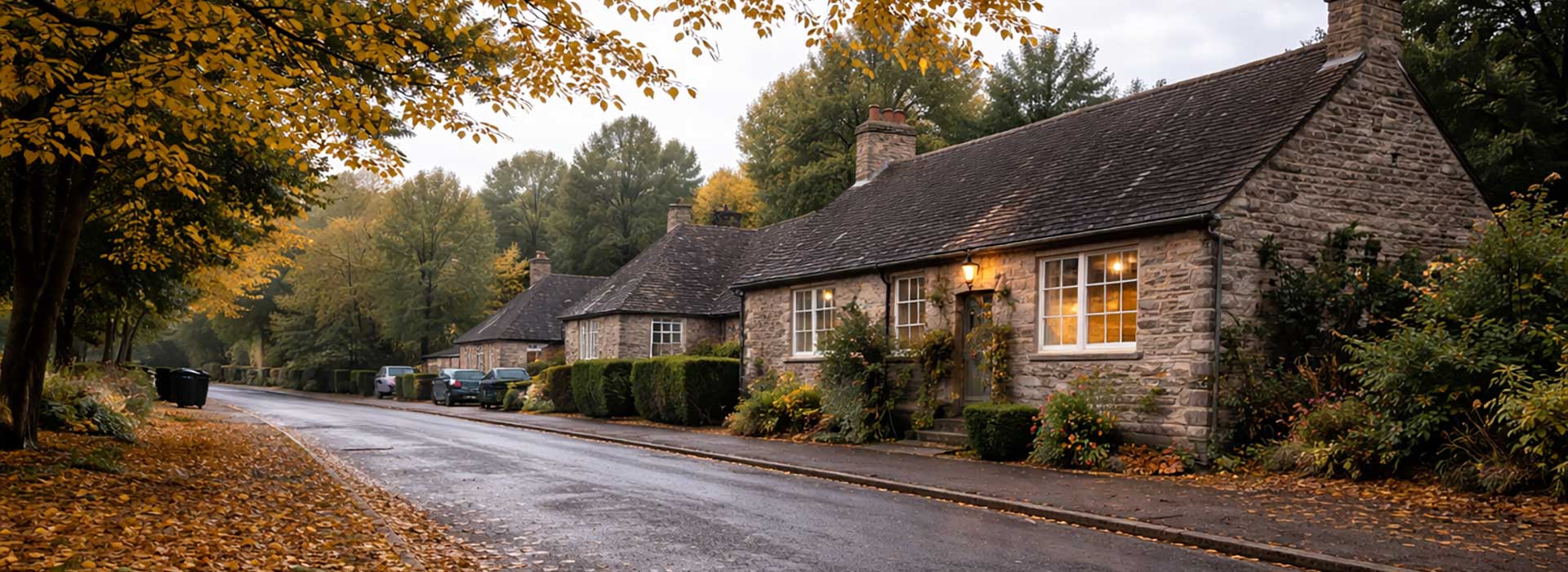

Barn conversions look wonderful on a brochure. To an insurer, they raise a quiet pause. Timber frames, stone walls, exposed beams and rural locations all behave differently from standard housing stock.
That does not mean cover is hard to find. It does mean the detail matters more than usual.

Why barn conversions are treated differently
Most converted barns sit somewhere between agricultural buildings and residential homes.
The structure may be hundreds of years old, even if the conversion is recent. Walls may not be cavity construction. Roofs may rely on original timbers. Floors can sit directly on ground that was never designed for living space.
Insurers price for how the building performs when something goes wrong, not how smart it looks on a sunny afternoon.
Rebuild costs are rarely intuitive
Converted barns often cost far more to rebuild than owners expect.
Stonework, oak frames, bespoke glazing and specialist roof materials push costs up quickly. Access can be awkward, especially in rural settings where machinery and scaffolding are harder to move.
Market value and rebuild cost rarely line up, and insurers work from the rebuild figure.
Original structure versus conversion work
Insurers usually assess two things at once.
First, the condition of the original barn structure. Second, the quality and age of the conversion work. Poor joins between old and new are a common source of water ingress and movement claims.
Documentation helps here. Completion certificates, structural reports and warranties reduce guesswork.
Roof construction and weather exposure
Barn roofs take a beating.
Large roof spans, exposed locations and traditional coverings increase storm and water damage risk. Some roofs were never designed to keep living space dry year-round.
Insurers often ask about roof age, materials and maintenance history. Vague answers tend to affect terms.
Fire risk in open-plan layouts
Open-plan barn interiors look dramatic. They also change fire behaviour.
Exposed beams, wood-burning stoves and large open volumes allow fire to spread faster. Insurers usually focus on chimney maintenance, fire detection and electrical upgrades.
Modern systems fitted sensitively are usually welcomed.
Utilities and non-standard services
Many barn conversions rely on alternatives.
- Private drainage systems
- Oil or LPG heating
- Private water supplies
- Long or shared access tracks
These features are insurable, but they add complexity. Damage caused by failure or poor maintenance is often scrutinised closely.
Subsidence, settlement and movement
Movement is not unusual in converted barns.
Original foundations may be shallow or irregular. Some degree of historic movement is common and not always a problem. Ongoing movement without investigation is.
Insurers look for evidence that changes have stabilised.

Security in rural locations
Rural does not mean risk-free.
Barn conversions can be isolated, with limited natural surveillance. Insurers often ask about locks, alarms and outbuildings.
Security that respects the building usually satisfies requirements, but it still needs to be declared.
Outbuildings and remaining agricultural structures
Converted barns often come with extras.
Detached garages, remaining farm buildings and workshops may or may not be included automatically. Their construction and use matter.
Assuming they are covered is a common mistake.
How claims usually go wrong
Most claim disputes follow familiar patterns.
- Rebuild values set far too low
- Assumptions that modern materials will be used for repairs
- Undeclared non-standard services
- Maintenance issues treated as insured damage
Converted barns can be insured sensibly and successfully. The policy just needs to reflect what the building actually is, not what it used to be, or what it resembles in a magazine spread.